Week 8 - The importance of tracking progress.
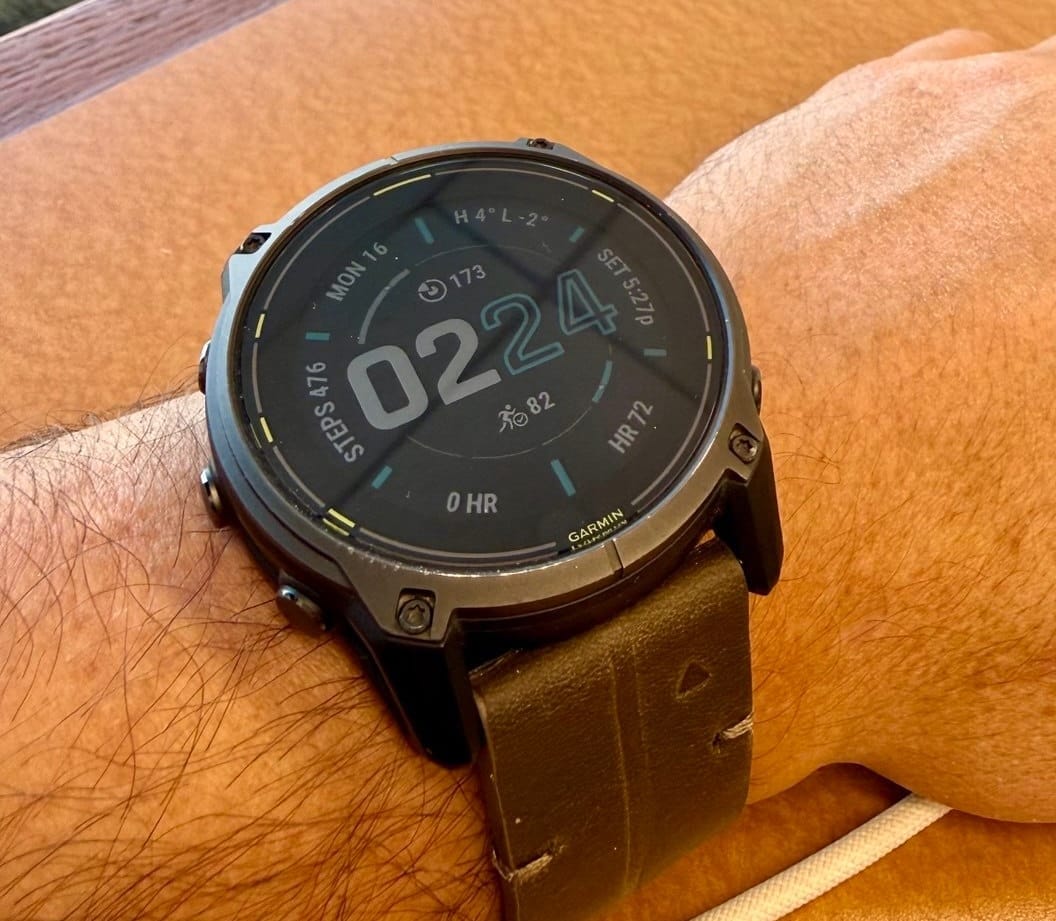
The journey to getting fit and wealthy will not be without its ups and downs. The past week saw my old knee injury (ACL) rear its ugly head. While my investments took a bit of dive due to the ongoing market volatility around AI disrupting Software business model. Unfortunately, the injury stopped my stint of uninterrupted 300 intensity minutes weekly, as I could barely walk for a few days. This type of headwinds bound to come-up on your journey for your goals too. It is never meant to be a smooth sailing. What we do in this situation is to improvise and adapt.
As my injury rules out any running and soccer for a foreseeable future, I found the joy of the elliptical machine. Ellipticals are great for people struggling with foot injuries and at a harder setting will provide you with a comparable and even more challenging cardio exercise with extra burn on your thigh muscles. Being able to do a full body (ellipticals have pull and push handles for your hands too!) conditioning exercise, with a low knee impact turned out to be much more enjoyable experience than I had anticipated. Furthermore, I am also updating my tracking goal from 300 intensity minutes to Activity Calories as I switch my training plan from full on intense workouts to more moderate recovery sessions with few walks sprinkled in there that won't get recorded as intensity minutes by my watch, but still burns calories. My new goal is 2400 Activity calories per week - the arbitrary number I picked because my garmin tracker graph has a line there at 2400 calories mark, that also conveniently approximates to four to five weekly activities. This brings me nicely to the main point of my today's post - the importance of measuring progress.
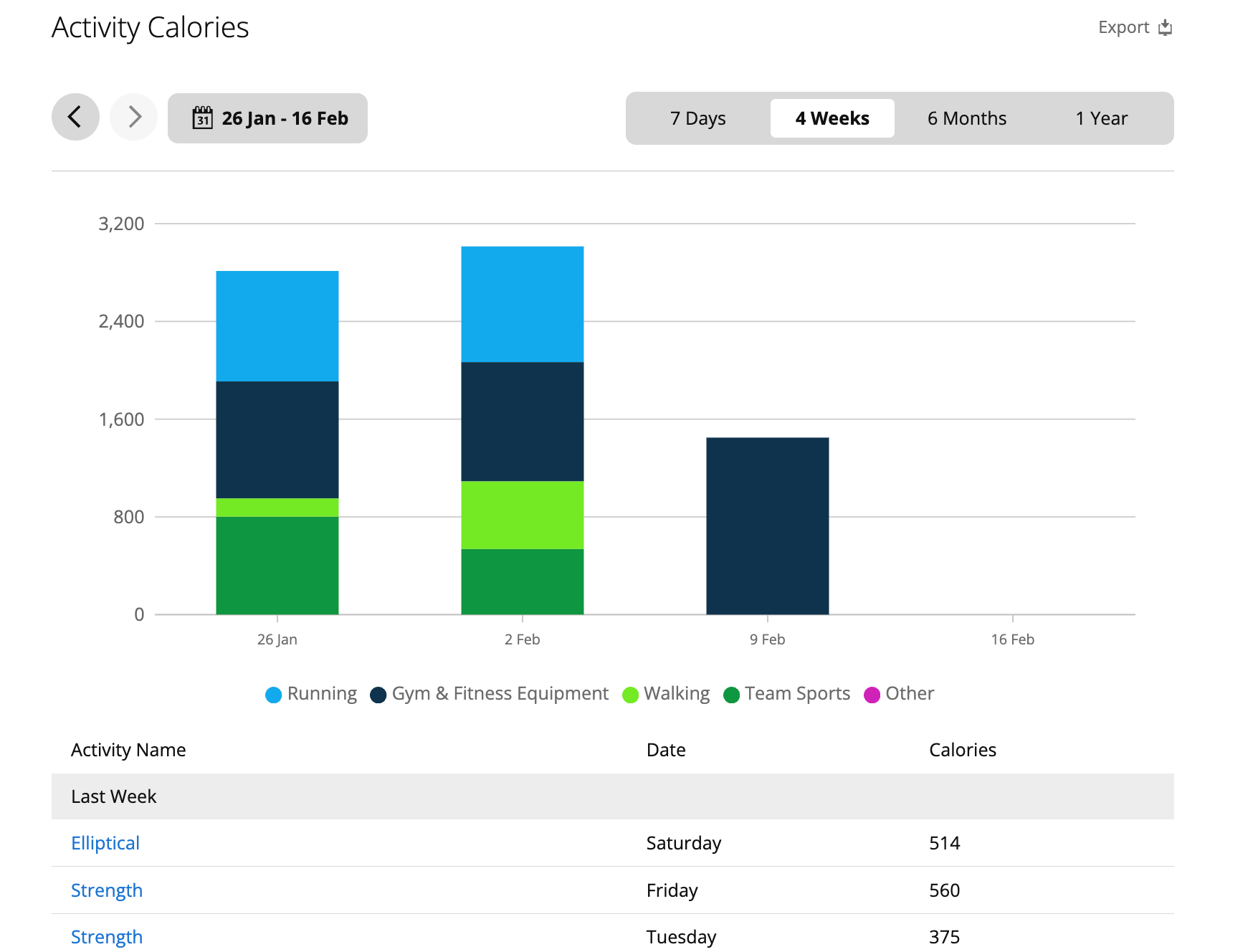
Invest in a sports watch and keep an exercise tracker.
Getting fit rests on number of foundations which are non-negotiable. Those foundations are:
1. Having a solid training plan and measuring them overtime.
2. Having a solid dietary plan (1.6g of protein per kg of weight, minimize sweets).
3. Quality Sleep 7-9 hours per day for recovery.
Lets talk about the numero uno in the list - having a training plan and tracking progress overtime. The need for it arises from the way human brain works. Our brains don't like to expend effort on consciously deciding things on little things as that can lead to a decision fatigue. Having to decide which work-out you are going to do every time is costly for our brain and increases inertia. As a result we are more likely to skip the gym altogether and wallow in the couch. Similarly, doing something without knowing if it is making any difference in your fitness can also be daunting. We want our actions to make a difference and have a meaning. In fact, one of the ways of mental torture was to make people dig a hole in the ground for all day and then make them fill it back up - meaningless work! Measuring progress lets our brain to operate on autopilot. With my sports-watch I know that last session was a cardio on elliptical, so today will be a strength training day. With my watch i can pace my work out with proper breaks so I don't gas out, which makes for an enjoyable workout. With my sleep tracker I can see how I have recovered through metrics like Resting Heart Rate and overnight HRV and whether I need a rest day. Through my exercise tracker, I can see how much stronger I have become and how much more I can lift compared to two years ago when I started the tracker. These things tingle my heart and keep me motivated. In short they reduce inertia. They chip away the obstacles that can become a path of resistance in you acting to become a fit person. I like to think I am a disciplined man, but I am certain that I would have given up had I not come up with ways to track my progress.
